Cleveland-Cliffs redirects $500 million DOE grant to blast furnace reline and 70 MW cogeneration unit at Middletown Works
Cleveland-Cliffs will use a $500 million DOE Industrial Demonstrations grant to reline a 73-year-old blast furnace and install a 70 MW cogeneration unit, abandoning a hydrogen-ready DRI project.
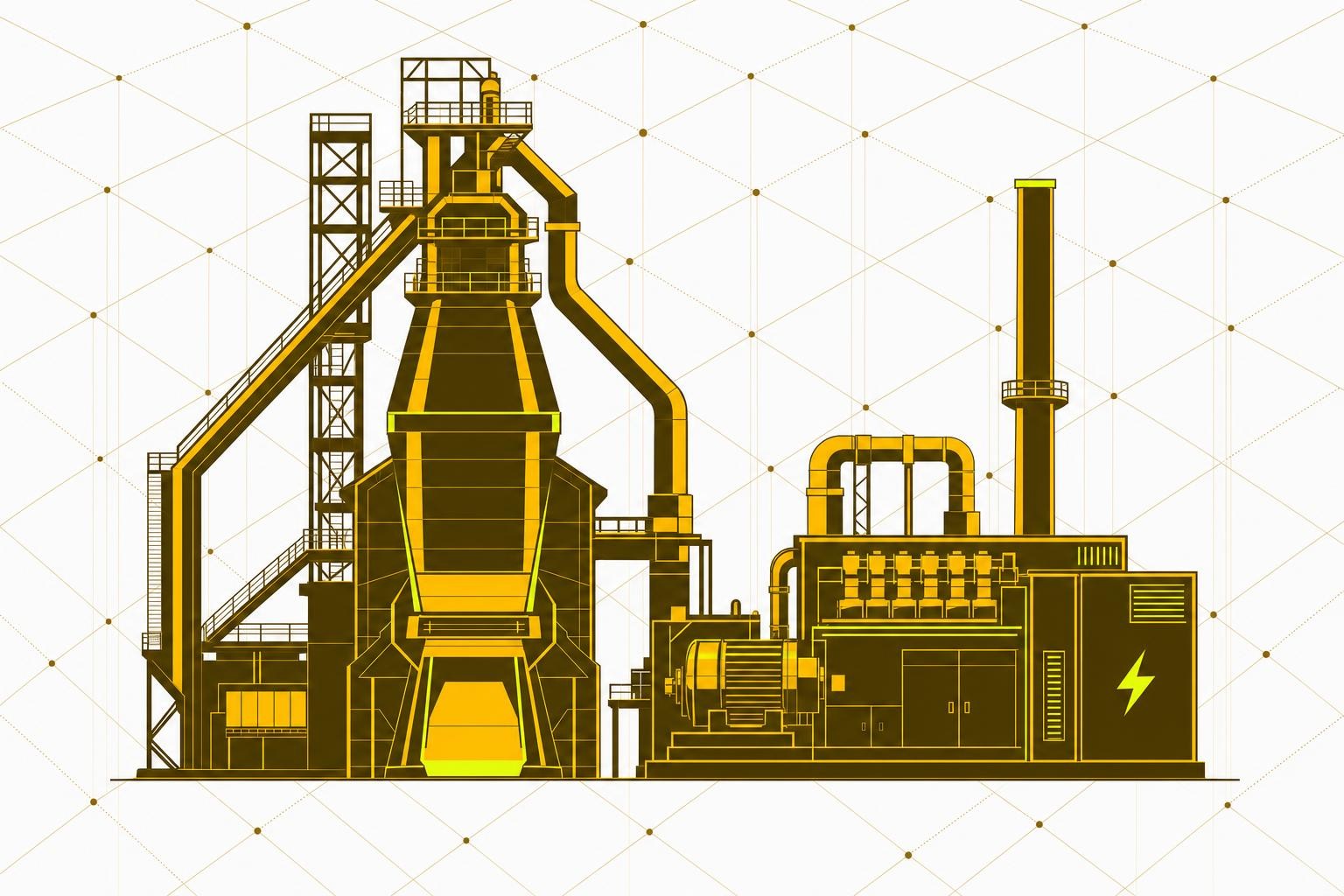
Cleveland-Cliffs announced on 21 August 2026 that it will deploy a $1 billion investment at its Middletown Works steel mill in Ohio - half funded by a $500 million Department of Energy grant - to reline an existing coal-fired blast furnace and install a cogeneration unit capable of generating roughly 70 MW of net electricity for on-site use, abandoning a previously approved plan to replace the furnace with hydrogen-ready direct reduced iron technology[1].
What changed
The original award, made in 2024 under DOE's Industrial Demonstrations Program, was structured to replace the Middletown blast furnace with a 2.5-million-tonne hydrogen-ready DRI plant and two 120 MW electric melting furnaces[1]. DOE projected the project would cut roughly one million tonnes of greenhouse gas emissions annually and create 170 permanent jobs and up to 1,200 construction jobs[1].
Cleveland-Cliffs began signalling a change of direction in summer 2025, telling investors it was negotiating with DOE to "explore changes to the scope to better align with the administration's energy priorities"[1]. The company filed an air-permit application with Ohio's environmental regulator in February 2026 outlining the revised plan before any public announcement[1].
The rescoped project now covers:
- Blast furnace reline and inner-lining replacement on the 73-year-old No. 3 furnace
- Advanced material handling infrastructure and AI-enabled process control
- A cogeneration facility burning blast furnace waste gas to produce steam and approximately 70 MW of net electricity for on-site consumption
Cleveland-Cliffs already operates cogeneration at Burns Harbor and Indiana Harbor, where by-product gases supply 75% and 100% of each site's electricity needs, respectively. The company says the Middletown unit will self-generate nearly 50% of the mill's electricity requirements, reducing its draw on the local grid[1].
The DOE funding framework
The grant survived the Trump administration's sweeping cancellations of OCED awards last year, even as DOE terminated 24 other OCED awards totalling more than $3.7 billion and eventually shut down the office itself[1]. The OCED funding model requires the government to match what the company contributes; the total project cost - $500 million from DOE, $500 million from Cleveland-Cliffs - is the same figure attached to the original green-steel version[1].
The revised scope requires Ohio EPA approval of an air permit. The agency said it expects to make a final determination within the next few months. Cleveland-Cliffs said the blast furnace rebuild is planned for completion in the first quarter of 2030, with investment deployed over the next four years while maintaining uninterrupted steel production.
What to watch
The Ohio EPA air-permit decision is the immediate gate. If approved as submitted, analysts and environmental groups warn the reline could lock the mill into coal-based ironmaking for the next two decades - a material constraint on any future decarbonisation pathway for one of the largest integrated steel facilities in the US Midwest. The question for grid operators in the AEP Ohio service territory is narrower: whether 70 MW of new behind-the-meter generation at a major industrial load changes local capacity accounting in the next PJM planning cycle.
The images and texts on this page were created with the help of AI.
Related
Ready-to-build BESS projects lose their premium as Australia's NEM arbitrage spreads collapse 85%
Panellists at the Battery Asset Management Summit Australia 2026 said the venture-capital-style returns that once rewarded ready-to-build BESS projects have disappeared as NEM price spreads fell 85% in a year.
10 Sept 2026UK government opens three-month consultation on AI for clean energy, backed by 34-recommendation network review
DESNZ published its Vision for an AI-enabled clean energy system on 8 September, opening a call for evidence that closes 6 November and will feed into the UK's first AI for Clean Energy Strategy.
10 Sept 2026Heatwaves expose a three-layer risk for wind operators: resource, hardware, and people
Extreme heat cuts wind output, stresses nacelle components, and grounds maintenance crews - all at once. A look at how bad the summer of 2026 has been, and what the trend means for grid reliability.
10 Sept 2026